I wrote the following story for a local nonprofit’s newsletter in an effort to spread awareness about homelessness in my community and help the organization raise money. Please take a read, and if you’re interested in donating, you can do so here.
James’ story
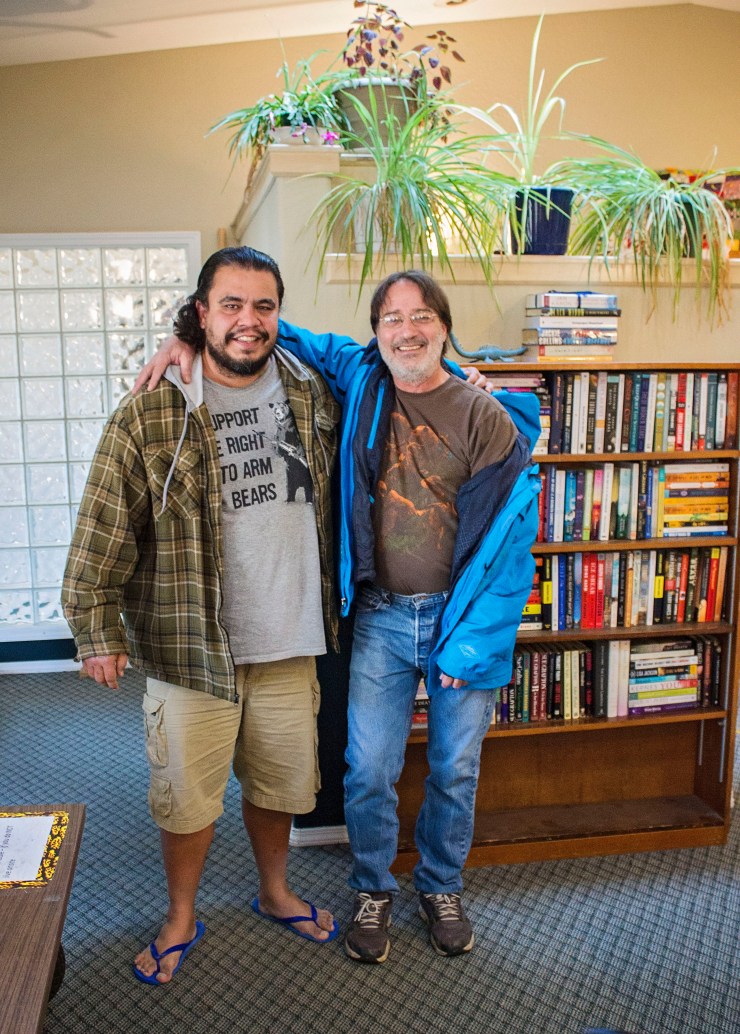
When James Fernandez arrived at Sojourners’ Alliance more than a year ago, he had nothing.
Back problems after years of construction work left the 40-year-old unable to work. He couldn’t afford housing or food. Not wanting to be a burden to his friends by sleeping on their couch, James sought a different solution that would allow him more independence and a chance to get back on his feet with dignity.
He discovered Sojourners’ Alliance, the only transitional housing shelter in the Moscow/Pullman area.
Now, the Hawaii native is back in school, seeking a bachelor’s degree in mathematics from the University of Idaho. He hopes to go to grad school someday and study plasma physics.
Homelessness in our community
Without Sojourners’ Alliance, people like James would never be able to reach their full potential.
I think a lot of us, myself included, forget that homelessness exists in our small communities. We don’t see our homeless neighbors sleeping on the streets like we might in downtown Seattle.
Homelessness looks different here. Because we live in a rural area, our homeless neighbors are sleeping in sheds or barns on the outskirts of town. They’re camping in abandoned trailers or tents in Robinson Park, by the river, up on Moscow Mountain, or out in the forest.
According to the most recent point-in-time count report conducted in January by the Idaho Housing and Finance Association, there are 1,966 homeless people in Idaho. Five percent of them live in Region 2, which includes Latah, Idaho, Clearwater, Lewis, and Nez Perce counties. That’s 96 people.
So you see, homelessness does exist right in our backyards. We are lucky to have an organization like Sojourners’ Alliance helping the less fortunate in our communities. However, if we don’t support this essential organization, we will lose it.
Working at Sojourners’ Alliance
The atmosphere at Sojourners’ Alliance is probably not what you’d expect at a transitional housing shelter. The three full-time employees and one part-time employee in the front office make it a homey, comfortable environment. Complete with rubber band fights, jokes, and three fun-loving dogs, the office is a place where shelter residents, volunteers, and staff can get to know each other.
It is also a place where hard decisions have to be made.
Steve Bonnar, executive director of Sojourners’ Alliance for more than nine years, knows better than anyone what it’s like to make the tough calls. Whether it’s coming up with a plan to keep Sojourners’ open despite increasingly limited funding or expelling a resident for violating rules, Steve gets the job done.
A major part of what makes Steve such an inspirational leader is his ability to work with people. He’s known for his compassion, knowledge, dedication, and laid-back personality along with his ability to be harsh with people when he needs to be.
Full time case manager Tanya Salada, 51, who’s worked at Sojourners’ for three years, says Steve is the best boss she’s ever had.
“Without Steve, it wouldn’t be Sojourners,’” she says.

Steve Bonnar: leading by example
“Moscow, as a community, is very lucky to have someone like Steve,” says part-time case manager Kelsey Black, 22. “He’s worked hundreds of hours of unpaid overtime. He stays late and comes in early. He comes in on the weekends. He took two weeks off in September, and it was his first vacation in years.”
This has been Steve’s reality for nearly a decade as he’s worked to transform Sojourners’ Alliance into what it is today. When others would have given up or gotten burnt out, Steve has kept at it.
In addition to his role as executive director of Sojourners’ Alliance, Steve serves on several state committees addressing poverty. He also partnered with former Sojourners’ Board of Directors president Darrell Keim to open the Latah Recovery Center on Main Street in Moscow, which seeks to help those dealing with mental health and/or addiction issues.
“As an executive director, Steve is well-informed, well-prepared, and bright, but modest and unassuming,” says Nancy Chaney, former mayor of Moscow. “Befitting his role, he does not put on airs in dress, speech, or manner.”
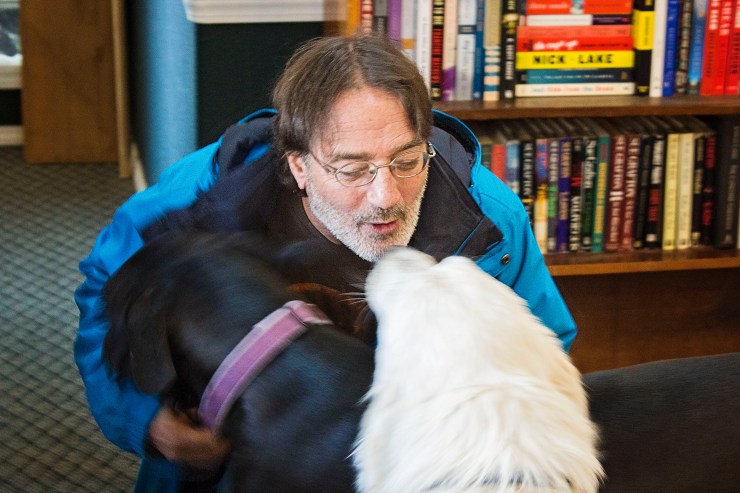
“Steve is a tremendous asset to this community, more than almost all of its citizens will ever realize because his contributions are so much behind the scenes,” says Carl Hunt, the current president of the Sojourners’ Alliance Board of Directors.
Even before he began his work at Sojourners’ Alliance, Steve was helping the disadvantaged. He worked as a therapist from 1985-2001 and ran a regional crisis hotline for years before shutting it down in 2006. One time, Steve sat by the hotline phone for 86 hours straight.
The good, the bad, and the reality
Steve has seen Sojourners’ residents successfully transition into their own housing, find jobs, and begin new stable lives. He’s also seen residents fall victim to addiction and once discovered a resident who’d killed himself. The emotional toll would break most people, but somehow Steve keeps working.
Steve and his staff members operate on a budget that barely keeps the doors open every year. Funding from state and federal grants is becoming increasingly limited while operating costs continue to skyrocket due to inflation. Then there are unexpected expenses like the $18,000 needed to repair an off-site Sojourners’ apartment destroyed by a recent tenant.
In order to keep the shelter open, Steve and the staff have made many sacrifices. Over the years, Steve and his coworker/wife Elaina Pierson have personally given up about $25,000 in unpaid overtime, unused vacation time, and cut hours.
This summer, Elaina was laid off for several months and Tanya cut her hours from 40 to 32 per week. At age 60, Steve has no retirement funding.
“To say that the organization operates on a ‘shoestring’ budget would be a gross understatement,” says Sojourners’ auditor Jason Wills.
Despite Steve and the staff’s endless hard work, there is still a very real chance Sojourners’ Alliance could close in the next year due to financial hardship. This would be catastrophic to the people who depend on the shelter’s services.
A community effort
This is where we, as a community, can help. Sojourners’ depends heavily on monetary donations to cover operational expenses. If each of us gave a little (or a lot!), we could make a tremendous difference. Our dollars would go directly toward helping our disadvantaged neighbors.
It’s an investment in the future of our community, and it’s an investment worth making.
To make a donation, bring cash or a check to the Sojourners’ Alliance office at 627 N. Van Buren St. in Moscow. You can also donate and find other information online at www.sojournersalliance.org.
 Meredith Metsker