Goede dag, friends!
I’m writing from the Deutsche Bahn (German train) as I travel from Amsterdam to Kaiserslautern, Germany. My Great Aunt Setona, who lives in nearby Weilerbach, will pick me up and I’ll be staying with her tonight before I fly home tomorrow afternoon out of Frankfurt. I can’t believe my 10-day adventure in Europe is nearly over. It went by way too fast!
But before I get sad about the impending end to my vacation, first I will write about my day in Amsterdam, Netherlands.
It took a nearly six-hour train ride to get to Amsterdam from Luxembourg, so I only had the evening to explore. After getting settled into my 5-bed co-ed dorm, I took a five-minute train ride to Amsterdam Centraal Station and hopped on a little boat for a canal tour of the city. For an hour, the boat weaved its way through the city’s intricate canal system, allowing those of us onboard to take pictures and listen to historical facts about what we were looking at. Amsterdam is just so cool. The houses and buildings along the canal are tall, very thin, and mostly made of brick. Each home has a hoist beam near the roof with a pulley system to lift valuable objects to the upper floors. The buildings are so thin that there is no room for wide stairs. The stairs inside are all narrow, winding and very steep.
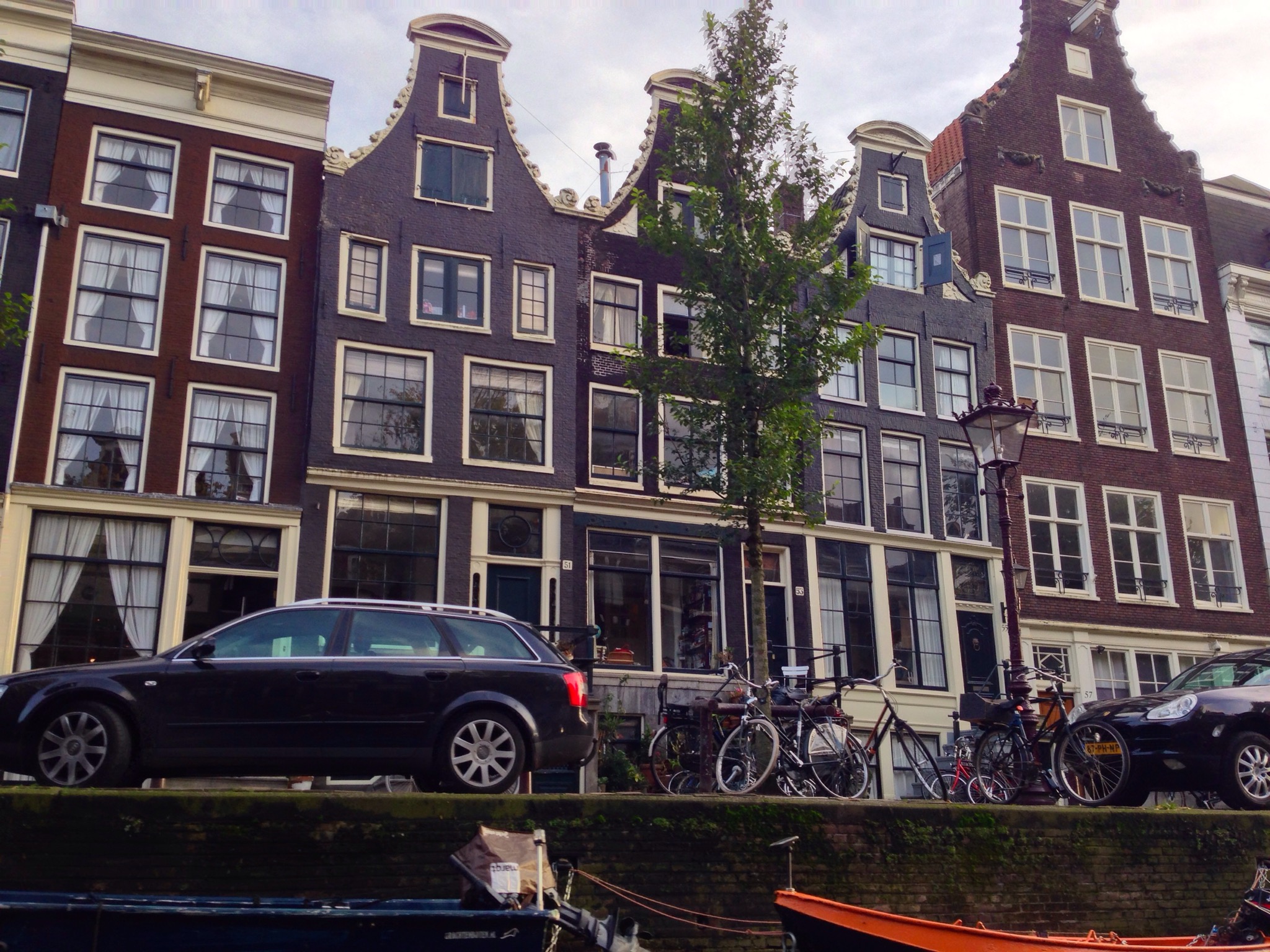 The narrow homes and warehouses along the canals in Amsterdam.
 What a typical street along the canals looks like.
There are also 2,500 houseboats floating on the outer edges of the canals throughout the city. Some appeared pretty run down, while others were really fancy with gardens, statues and lights on the decks. One boat had a poster on it advertising the Amsterdam Cheese Museum. If I had another day in the city, I would definitely check it out. And I’m not even joking about that. Next time I go, first things on the agenda are Amsterdam Cheese Museum and Van Gogh Museum. Yes, in that order. 🙂
 One of about 2,500 houseboats in the canals.
 Another view from the boat tour.
After the boat tour, I went in search of the Anne Frank house. I thought I knew where I was going, but it turns out the gal at the hostel front desk had given me incorrect directions. Thank goodness for nice Dutch people and street signs, because that’s the only reason I found it! I definitely miss having access to smartphone data and Google Maps without wifi.
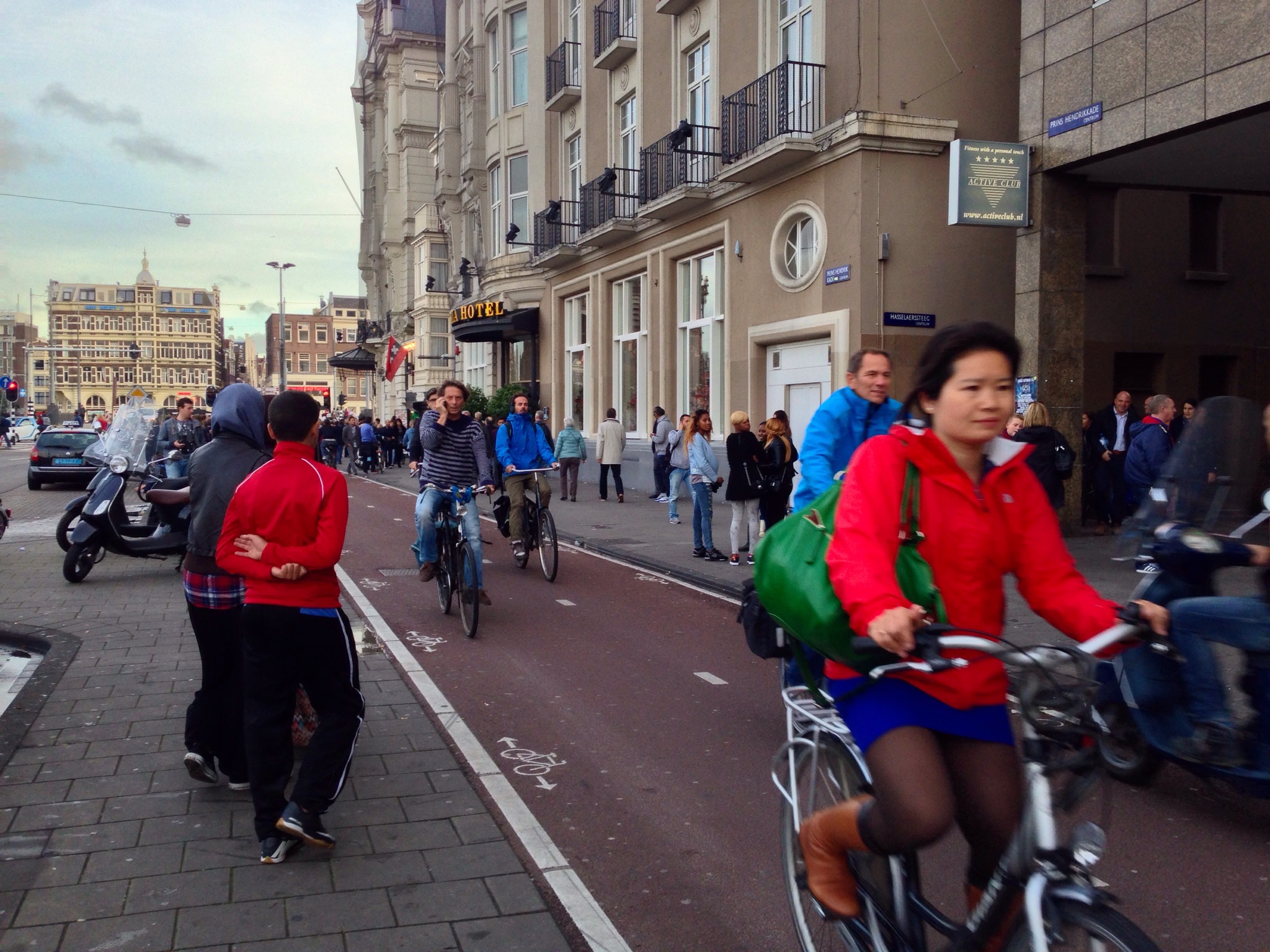 Everyone rides their bike in Amsterdam. They zip around so fast!
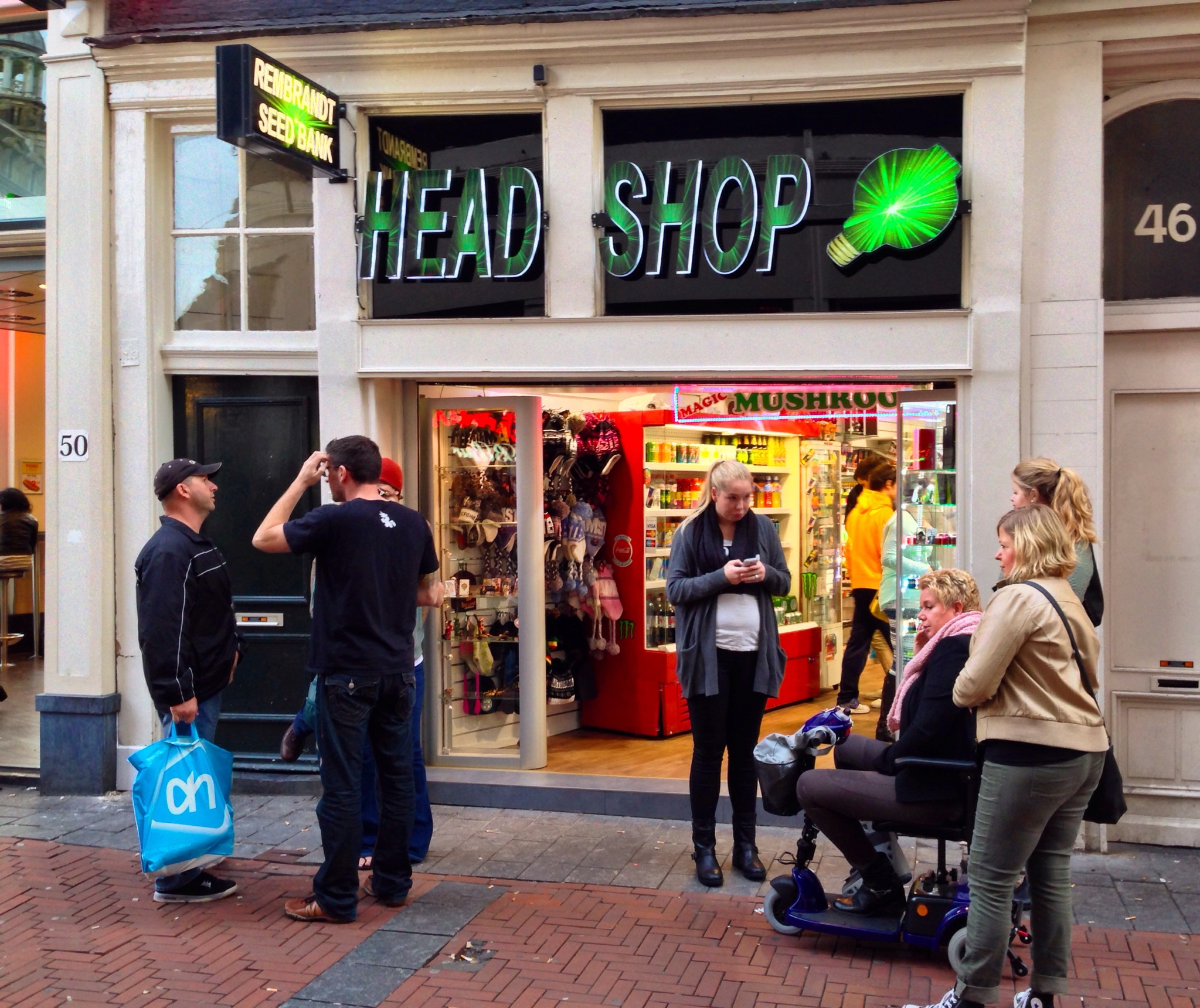 I passed two of these “magic mushroom” shops on my way to the Anne Frank house. Ah, Amsterdam.
When I finally arrived at the Anne Frank house (which is right along one of the main canals) there was a long line of people waiting to get in. Luckily, I only waited about 30 minutes. Unfortunately, it also started pouring rain while we were all standing outside. Crazy, heavy, cold rain. I was so grateful to have an umbrella in my bag, because that was nuts.
I don’t have any pictures of the inside of the Anne Frank house because no pictures are allowed. So I’ll do my best to paint a word picture.
The building where the Frank family hid during World War II is located on the Prinsengracht canal. The front of the building housed Otto Frank’s business, which he eventually had to give up because he was Jewish. The Frank family (Otto, his wife Edith, and daughters Margot and Anne) went into hiding in 1942 in a secret annex in the back of the building. They were joined by the van Pels family (Hermann, Auguste, and Peter) and Fritz Pfeffer.

 The exterior of the Anne Frank house and museum.
For two years they all lived in that annex, quiet and terrified of being found out. Four of Otto’s employees knew they were in hiding and helped them with groceries, medicines, clothing, books and other necessities. They risked everything, knowing the punishment for helping Jews was extremely severe. None of the men in the warehouse below the annex knew anything about it. During the day, the people in hiding had to be completely quiet. No flushing the toilet, no footsteps, no coughing, nothing. The windows were all covered with black curtains or opaque window clings.
For two years they lived like that. It was a really ingenious setup. They even had a bookcase that covered the secret door leading to their hideout. But someone betrayed them. And in 1944, the Nazis arrested all eight of them and the four helpers. The eight people in hiding were all sent to death camps. Only Otto survived. To this day no one knows who betrayed their secret.
Throughout the two years in hiding, Anne kept a diary. It started out with one red-checkered diary (which is on display in the museum) she received from her parents. Once she filled that one, she started writing in other notebooks and loose paper. She wrote about her experiences, copied her favorite quotes and composed some short stories. She aspired to be a famous author when the war was over.
But that never happened. At least not in the way she wanted. She died of typhus in the Bergen-Belsen death camp one month before the liberation. Just one month.
The Anne Frank museum allows visitors to see all the rooms in the secret annex. None of them are furnished. After the arrests, the Nazis took everything, and when Otto returned to Amsterdam after the war, he wanted it left empty. It symbolizes the void left by his deceased family and all the innocent people killed during the Nazi regime.
No one spoke a word as we all walked through the building. It made me really sad to see this place, this tiny haven that protected innocent, ordinary people from discrimination and annihilation. But I also couldn’t help but marvel at the cleverness of the hideout. It was impenetrable. Up until the betrayal at least.
There were quotes from Anne’s diary painted on the walls throughout the museum. It’s been years since I read her diary, and it amazed me just how perceptive and thoughtful she was. She was only a teenager, a young one at that. But she wrote with wisdom far beyond her years.
These are some of the ones that struck me most:
“One day this terrible war will be over. The time will come when we’ll be people again and not just Jews!” -April 11, 1944
“I long to ride a bike, dance, whistle, look at the world, feel young, and know that I am free.” – Dec. 24, 1943
“The English radio says they’re being gassed. I feel terrible.” – Oct. 9, 1942
I spent over an hour in the museum, which was established in 1960 with the encouragement of Otto Frank. It’s an amazing place, and I would highly recommend it to everyone. Between this tour and my tour last week at Dachau, I’ve learned a lot about World War II. It’s a totally different experience learning about it this way, rather than from a textbook.
After the tour, I had dinner at a little restaurant by a canal. I ordered spaghetti antiboise with a glass of rosé wine. For dessert, I tried banana crumble with vanilla ice cream. It was very tasty. The perfect way to end my short time in Amsterdam.
Afscheid for now!
 Meredith Metsker