Guten tag, friends!
I write to you now from my hostel in Salzburg, Austria. I took a bus from Munich to Salzburg this morning, and in a couple hours I will be participating in a Sound of Music tour! I’m really excited about it, but more on that later. First I’ll fill you in on my second day in Germany yesterday.
My day started slow. I slept in until about 8 a.m. I didn’t sleep all that well because a) I’m really jet lagged and my days and nights are now switched and b) Several of the guys sleeping in my co-ed dorm snored. Loudly. All night. Including the guy sleeping in the bunk below me. So I’m running on adrenaline at the moment!
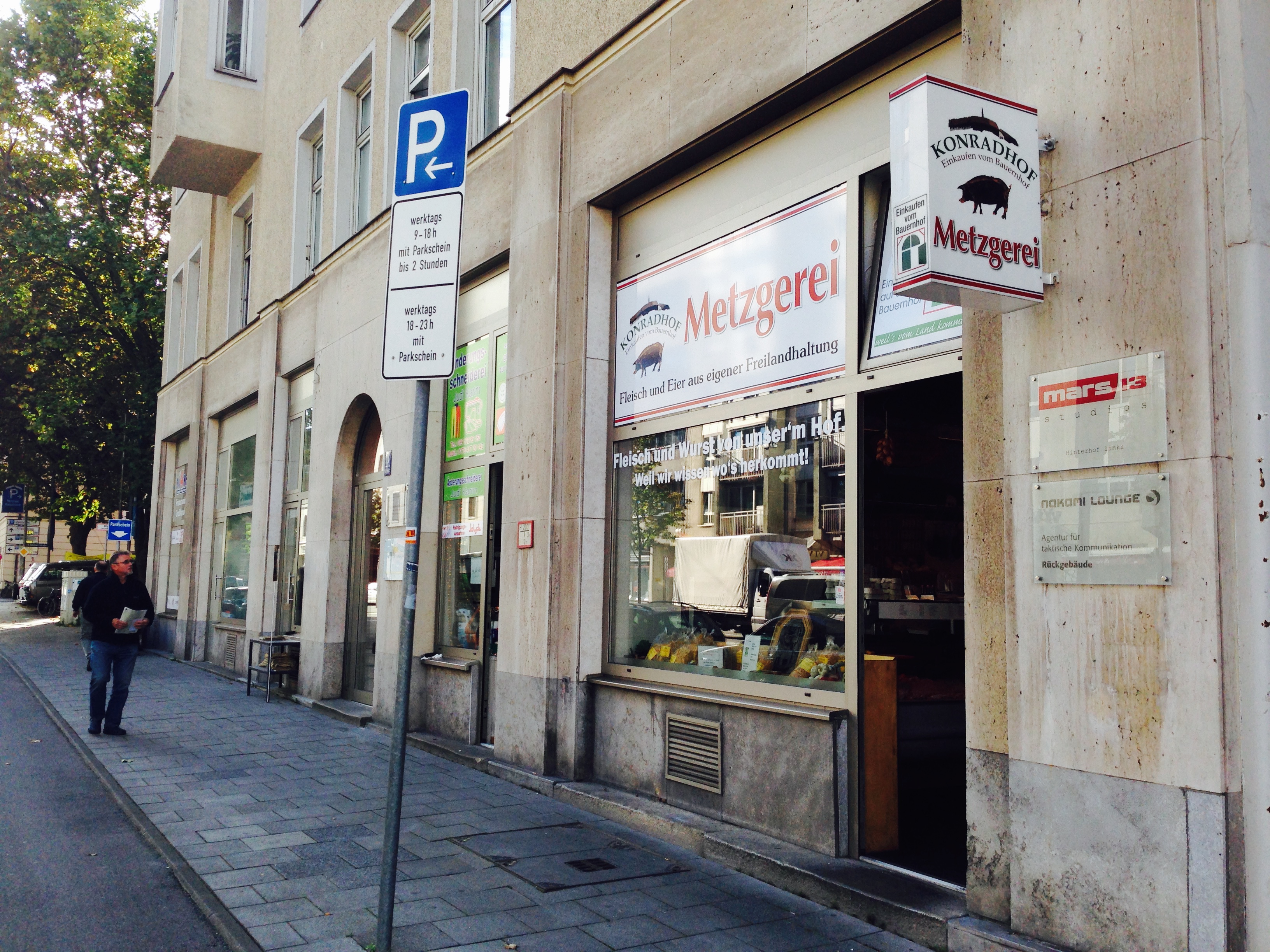
I wandered around Munich in the morning, taking in the sights and the people. I happened upon this sign just a couple blocks from my hostel, and I had to take a picture. “Metzgerei” means “butcher shop” in German. My last name, “Metsker,” is derived from “Metzger,” or “butcher.” But when my ancestors immigrated to the United States, somehow the spelling got changed to a more American spelling. Regardless, it’s a cool connection!
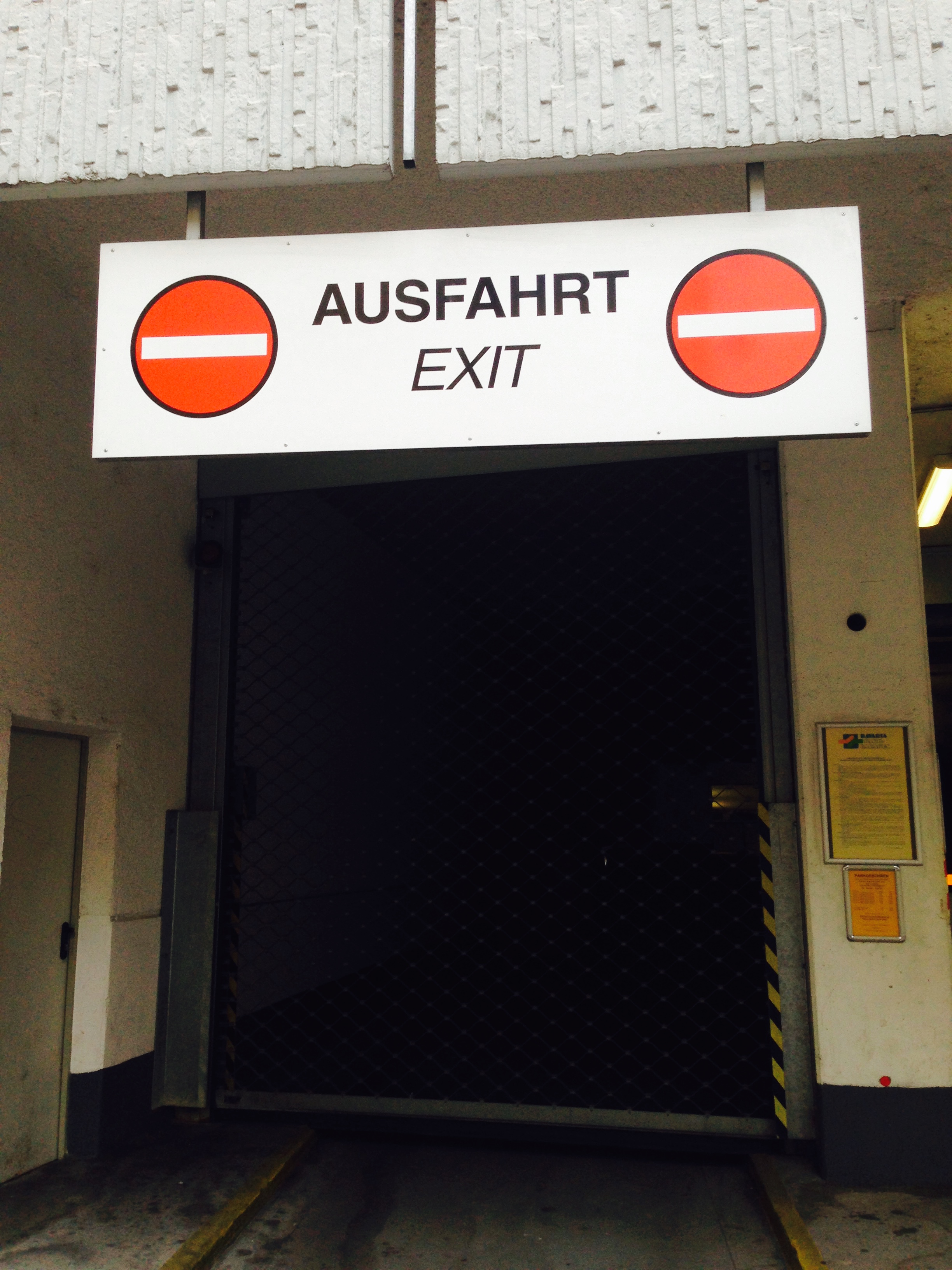
I also happened upon this sign, and I couldn’t help but giggle. “Ausfahrt” in German means “exit.” I know I’m probably too old for fart jokes, but I couldn’t help myself. I guess I’m one of those tourists.
Around noon, I made my way to the Hauptbahnhof (I never get tired of saying that. It’s the main train station in Munich). I bought a ticket for an afternoon tour of Dachau Concentration Camp Memorial Site. The tour group was small with 9 people, including our Irish tour guide, Keith. There were two young men from Qatar, an older couple from Missouri, a young woman from Sydney, Australia, a middle-aged couple from Alberta, Canada, and me. After two short train and bus rides, we arrived in Dachau.
*Please forgive the quality on the following pictures. I took them in RAW, forgetting I can’t upload that format to WordPress. So I had to use some free online converter to convert them to JPEGs.*
These days, Dachau is a perfectly ordinary, quaint German town. It’s quite lovely. But the bloody history associated with the town still hovers like a stormy cloud. Keith said when people from Dachau are asked where they are from, they usually say Munich to avoid judgment.
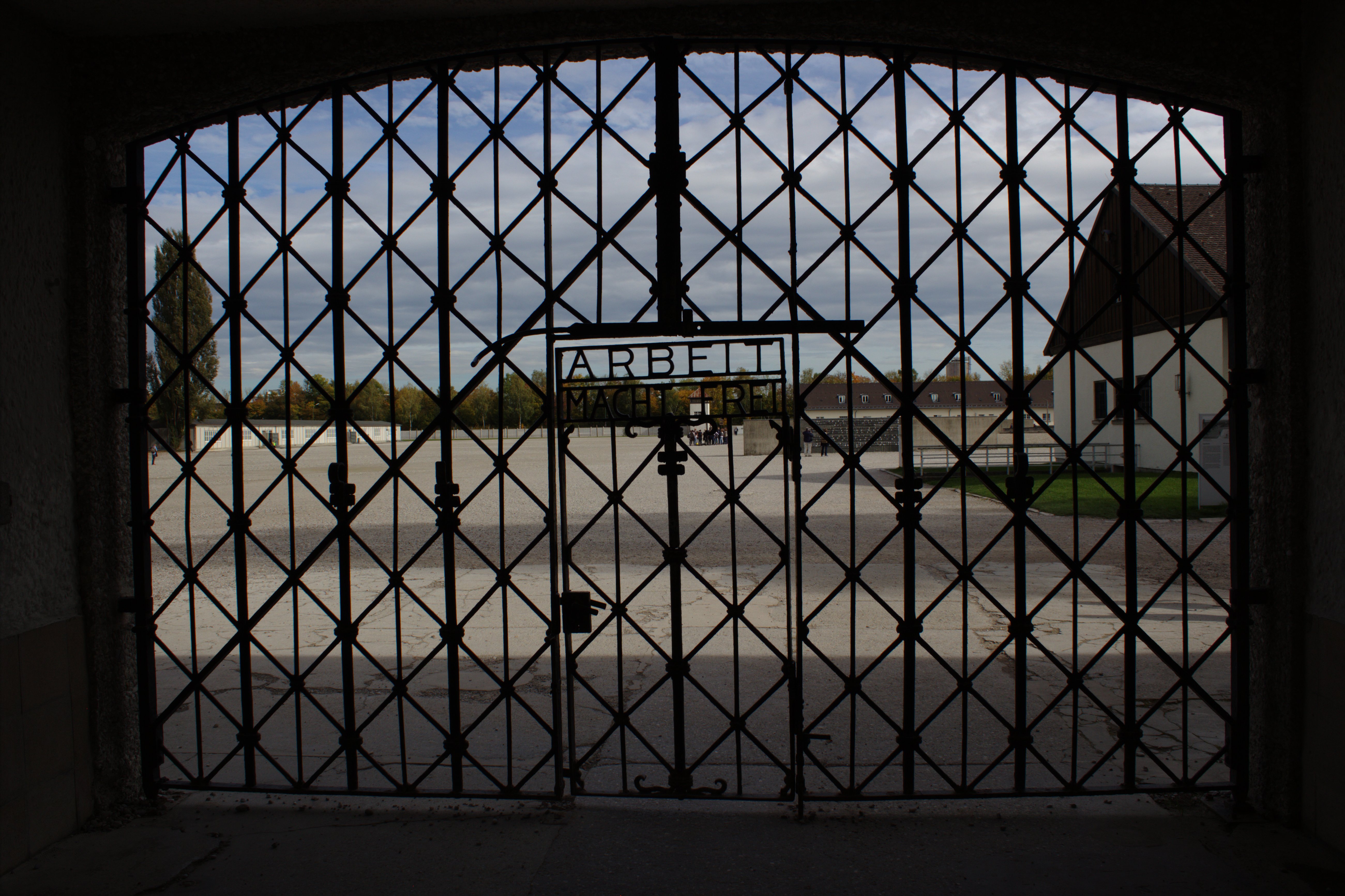
After a brief introduction from Keith detailing the history leading up to Dachau Concentration Camp’s opening in 1933, we entered the camp. A wrought iron gate stands guard at the entrance to the roll call area, where the men (only male prisoners at Dachau) were forced to stand at attention for hours, sometimes all day. The gate says “Arbeit Macht Frei” or “work will set you free.”

When the camp first opened, the prisoners were forced to do menial tasks that meant nothing. Sometimes it was standing all day in the hot sun or freezing cold. Other days they had to stand in the waist-high canal and pick the rocks up from the bottom. At the end of the day they had to put the rocks back. It was the Nazis’ way of breaking them and “re-educating” them in the Nazi idealogy. When the war started, they were put to work making war equipment.
We wandered through the museum, which included the area where the prisoners were brought in, stripped naked and assigned a prison number. The Nazis never referred to prisoners by name, only by their number.

We stopped for quite awhile in the shower room, and talked about the different methods of torture the Nazis used on the prisoners. In the shower room, there used to be thick wooden beams. The Nazis would tie a prisoner’s hands behind his back and loop the rope around a hook attached to the beam. The men were left to hang there, sinking closer to the ground with every passing minute, until their shoulders were nearly rotated all the way around. Sometimes the Nazis would kill the prisoners by tugging on their legs until their shoulders completely crunched in their sockets and caved in their sternum and everything else in their chests. Before this point in the tour, I had been feeling pretty hungry. After hearing this though, I had no appetite.
We then watched a short video with raw footage shot by American soldiers when they liberated Dachau in 1945. Shot after shot of piles of dead bodies and emaciated, grossly malnourished men. There was no sound or narration. Only the video. It was so hard to watch.
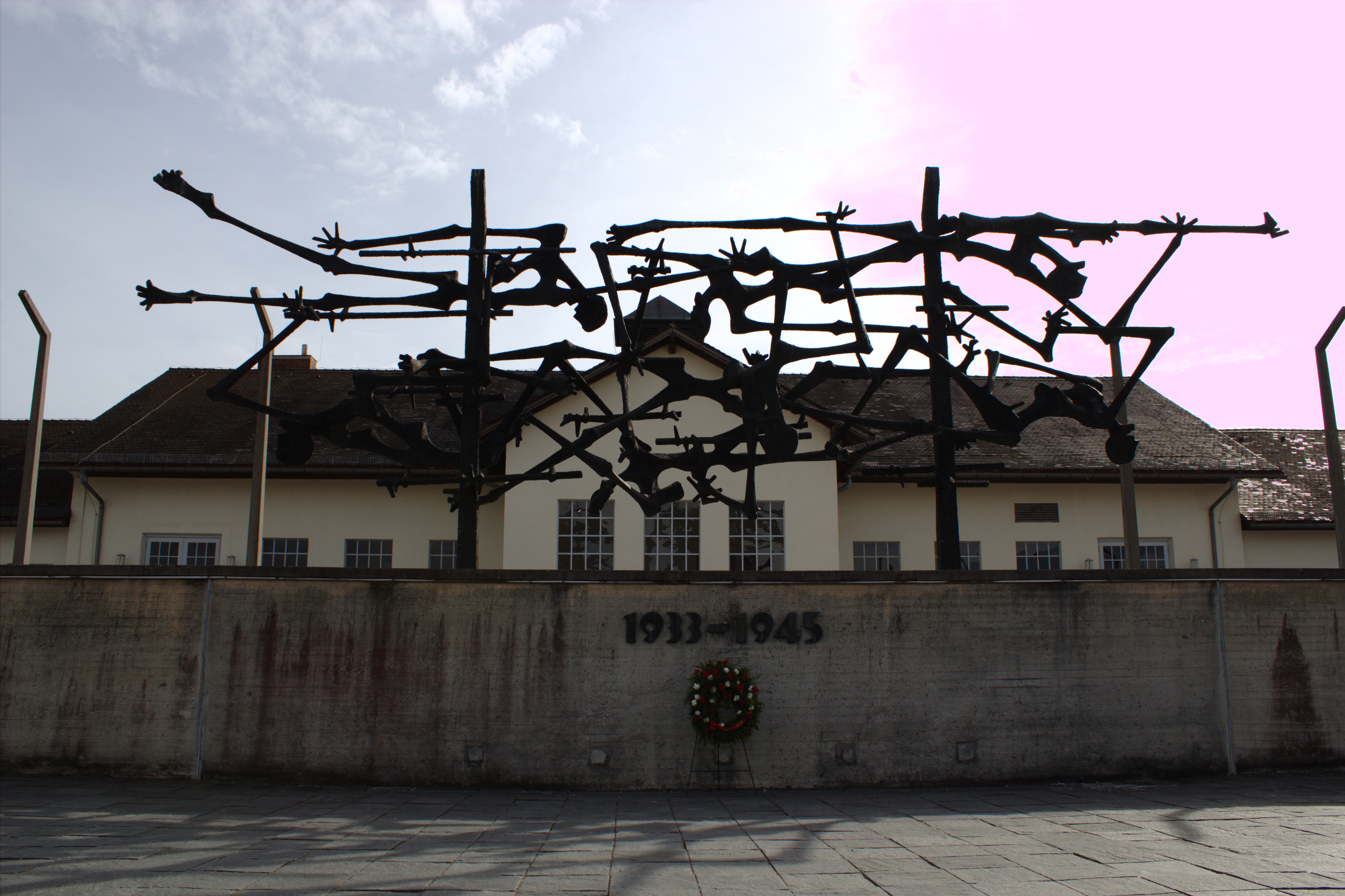
Outside of this building was a large iron art piece designed by a Dachau survivor. It can be interpreted differently by different people, but I saw the bodies of prisoners caught in barbed wire, desperate for an escape from the utter hell that was Dachau Concentration Camp.
We took a look in a replica of the barracks where tens of thousands of men were forced into sleeping quarters meant only for 6,000. Lice was rampant. The bunks were three levels high, with no ladder. When a man stuck in the middle of a bunk had to urinate, vomit or defecate, he had to do it where he was. There was no way to get out during the night. In the morning, the men on the lower bunks would be covered in urine, vomit or feces.
The last part of our tour took us to the Krematorium, where the ovens and gas chamber were located. The original crematorium was used to burn more than 11,000 bodies. Eventually, the Nazis built an even larger crematorium to keep up with the growing death rate. The grassy area surrounding this area is filled with the ashes of about 20,000 bodies.
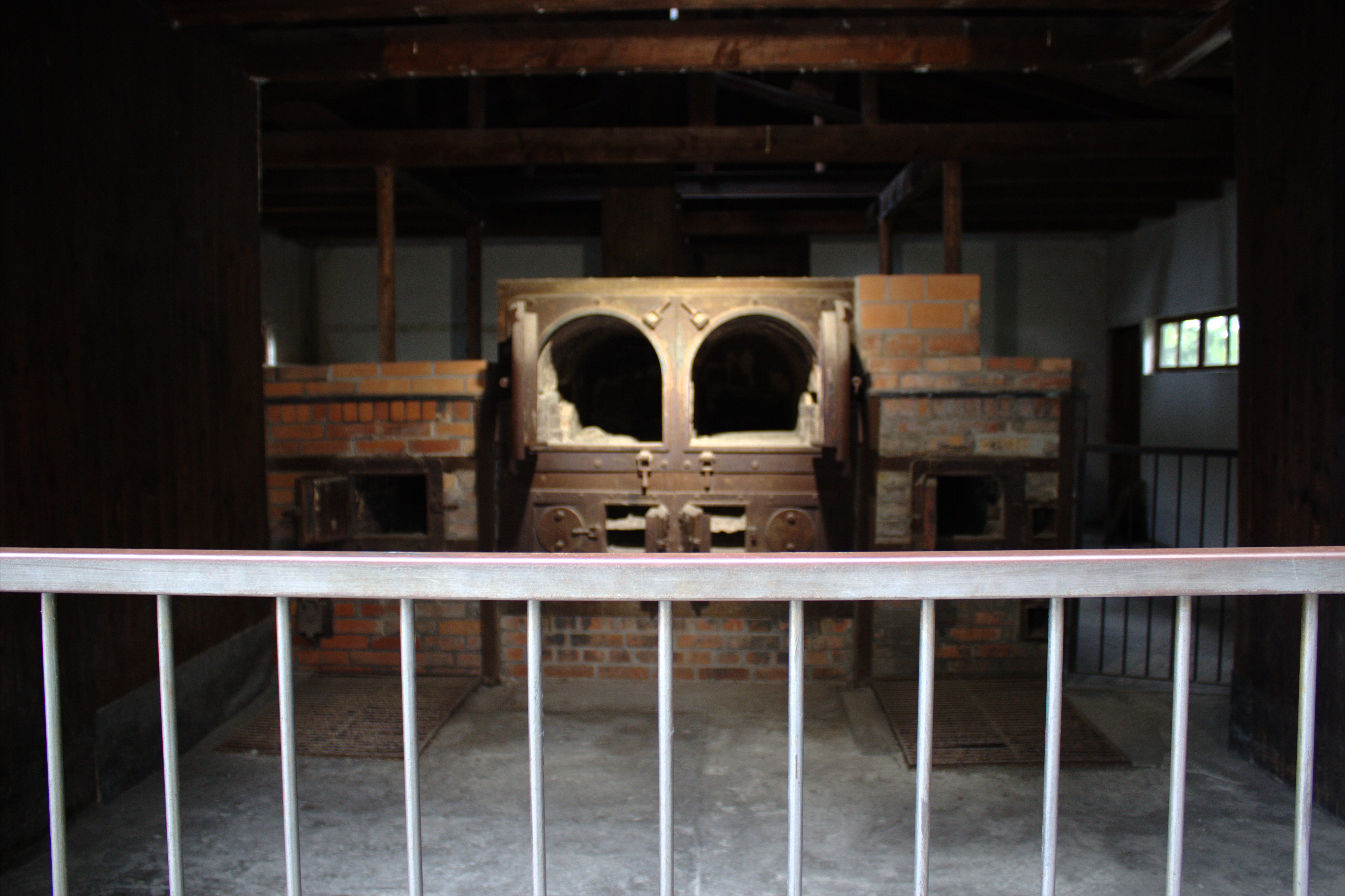
I took that picture of the old ovens, but I couldn’t bring myself to take a picture in the gas chambers. It seemed wrong and irreverent. The room was designed by the Nazis to look like a shower room so the prisoners wouldn’t put up a fight when they were told to go in. The Nazis even installed non-functioning shower heads in the ceiling. From inside you could see two grates that opened to the outside of the building. Nazi soldiers threw the cans of gas in the grate and closed the grate door. Then they walked away without ever seeing what they had done.
Just standing in the gas chamber brought on a feeling that’s hard to describe. The horrors that happened in Nazi concentration and extermination camps were hard for me to comprehend until this tour. Until I felt it. The chamber was cold, but that’s not why I had goosebumps.
Outside the gas chamber building was a statue of an emaciated man. It honors the unknown prisoners whose remains could never be identified. The message translates to “Honor the dead, but warn the living.”
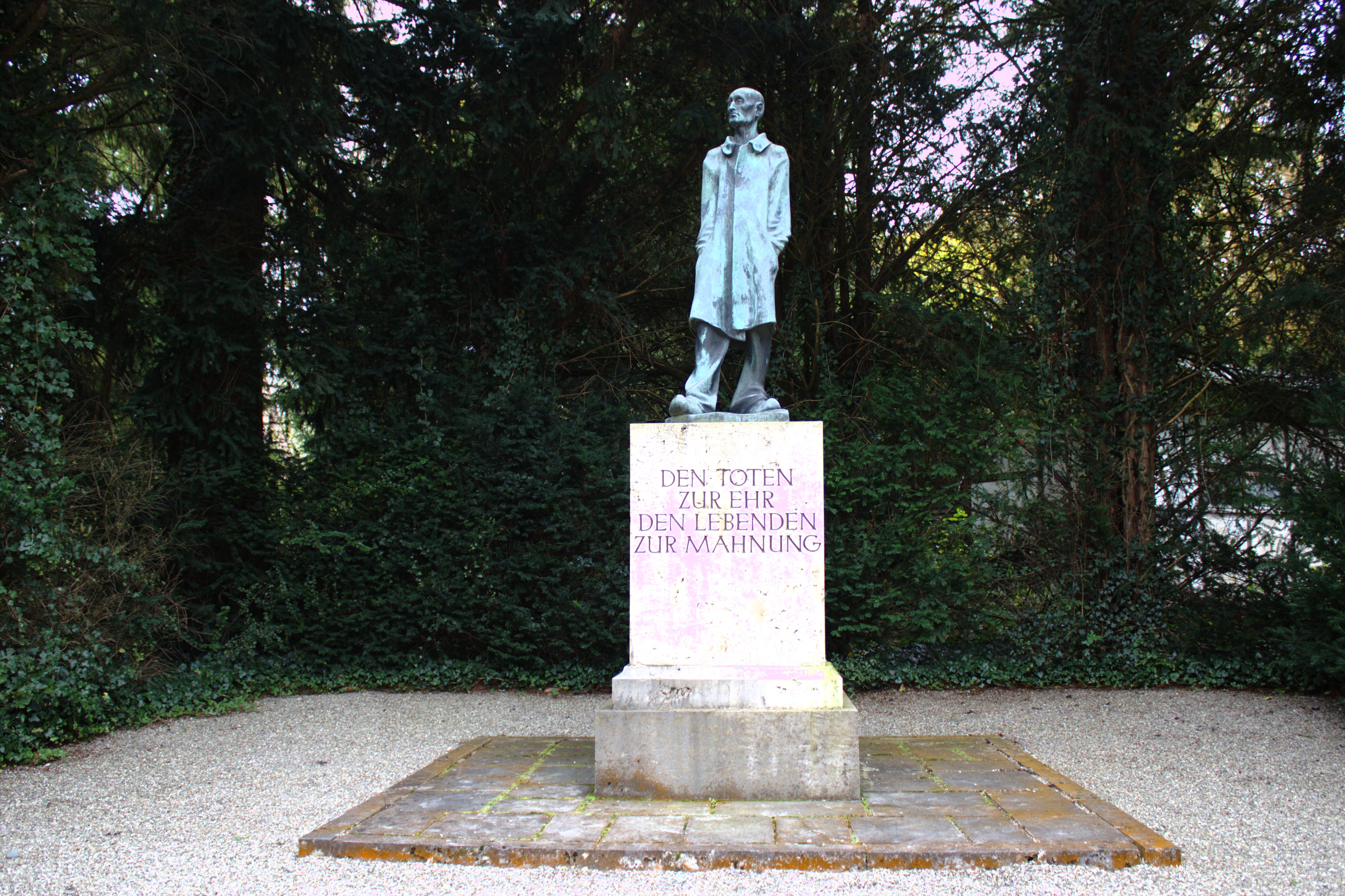
This represents the entire goal of the memorial site, which is to educate people about how the Holocaust happened and to make sure it never happens again.
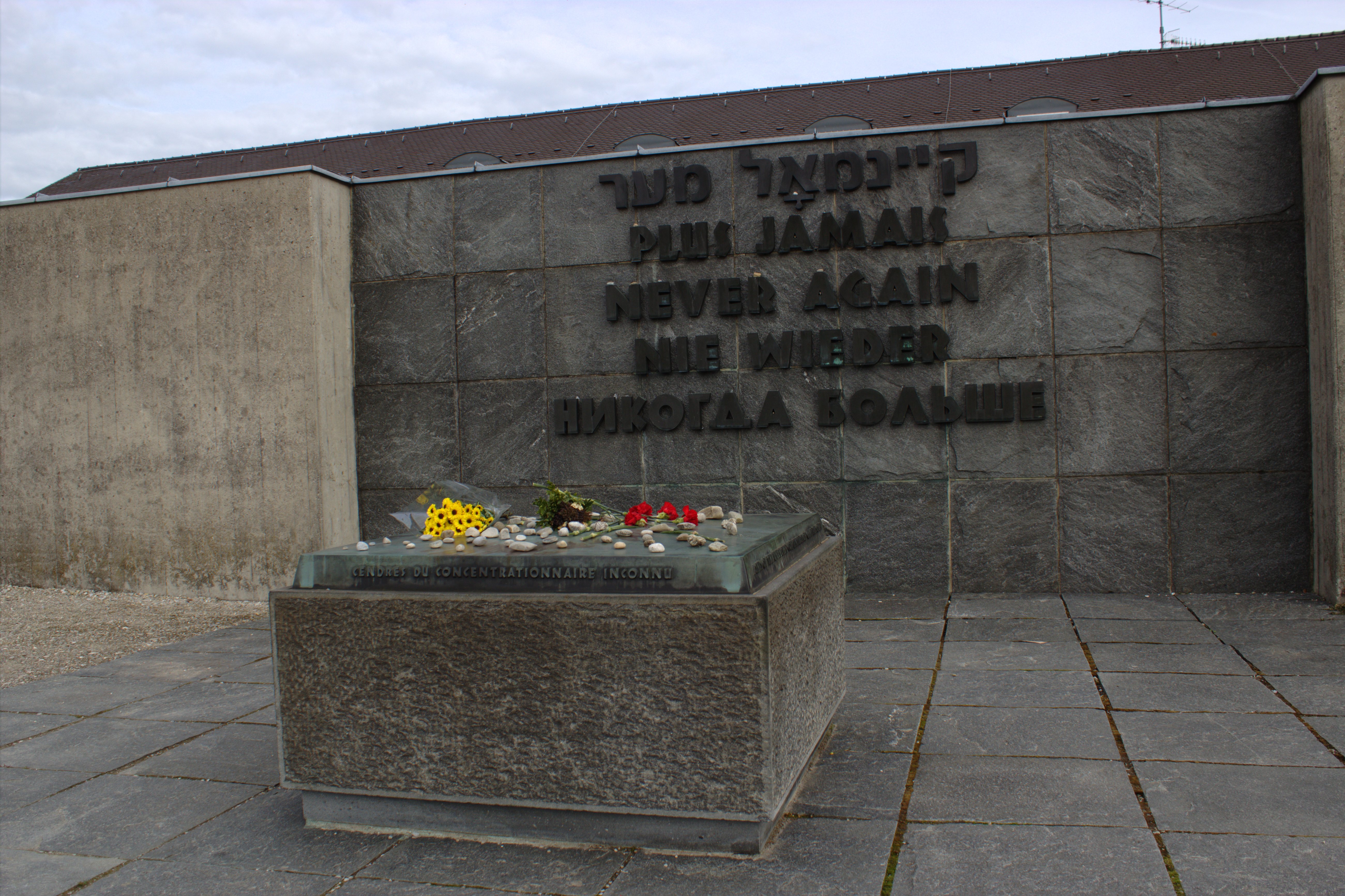
The tour was a very moving experience, and I would highly recommend it to anyone who visits Munich.
Tschüs for now.
 Meredith Metsker